
PHNOM PENH, April 29 (BTP): Cambodia’s Ministry of Commerce has raised retail fuel prices effective April 29, with Gasoline 92 increasing to 5,150 riels ($1.27) per litre and Gasoil 10ppm rising to 5,650 riels per litre, as escalating tensions involving Iran, Israel and the United States rattle global oil markets and raise concerns over supply disruptions.
The increase is expected to add pressure on Cambodia’s agriculture and transport sectors, where rural households rely heavily on diesel-powered machinery, irrigation pumps and transport vehicles, while informal workers face rising operating costs.
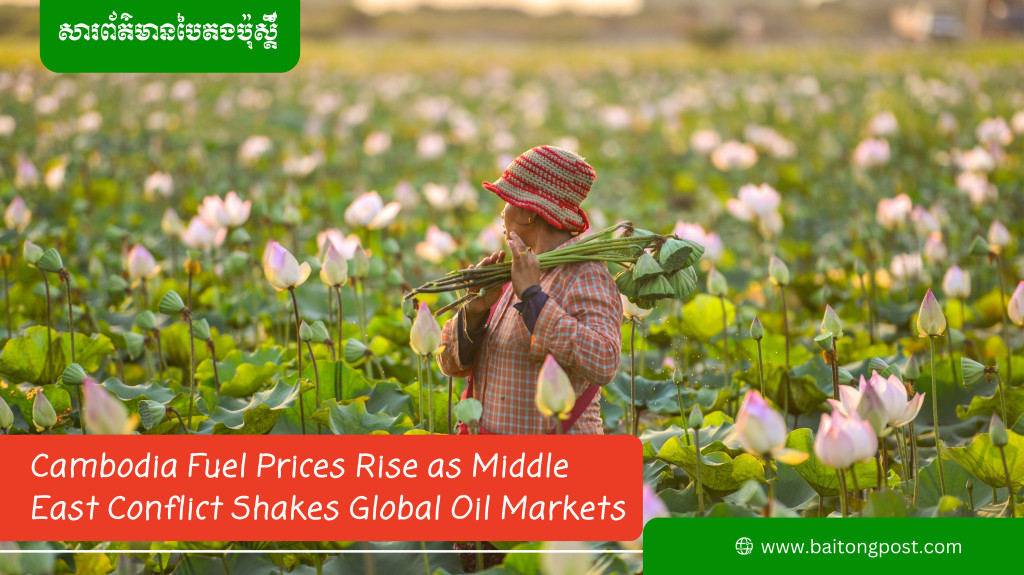
“We are already struggling with rising costs for seeds, fertilizer and transport. Now fuel prices are going up again, which means plowing, pumping water and bringing produce to market will all cost more,” said Ms. Pin Sokhim, a rice farmer in Kampong Speu province. “If crop prices do not increase, farmers will bear the losses and many may fall deeper into debt.”
Pin Sokhim said higher diesel prices were particularly concerning during planting and harvesting seasons, when small-scale farmers depend on fuel for irrigation and land preparation. Rising costs, she said, could also affect food production and the livelihoods of rural women farmers.
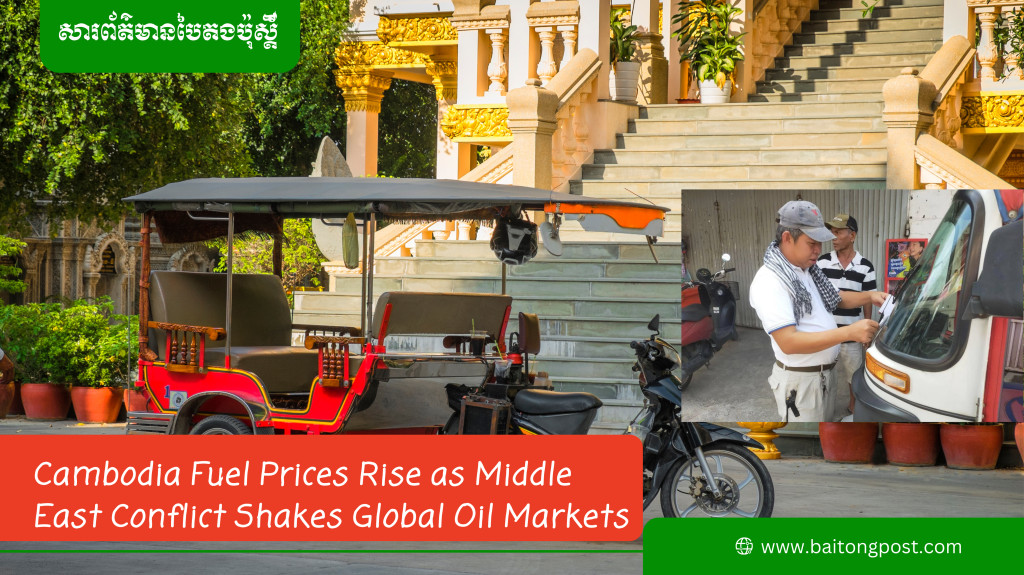
Fuel users in Cambodia’s informal economy also warned of broader impacts. “Rising fuel prices do not only affect farmers, but also informal workers who depend on transportation and daily mobility to earn a living,” said Mr. Sok Chhunoeng, President of the Cambodian Informal Worker Association (CIWA). “When fuel costs rise, delivery workers, street vendors and tuk-tuk drivers face higher expenses while incomes remain uncertain.”
He said prolonged increases in fuel prices could lead to higher transport fares and food prices, putting additional strain on low-income households already burdened by debt and unstable livelihoods.
Global oil markets have been volatile amid fears that conflict in the Middle East could threaten shipping through the Strait of Hormuz, a critical route for global crude exports. Analysts warn sustained disruption could deepen pressure on oil-importing economies such as Cambodia, where rising fuel prices often feed into transport, production and consumer costs.
For many rural communities, the impact extends beyond energy prices. Higher fuel costs can raise the price of agricultural inputs, increase marketing costs for crops and reduce already narrow margins for smallholder farmers.

 Prime Minister Calls for Stronger Support for Cambodia's Small and Medium Enterprises
 ADB to Mobilize $30 Billion by 2030 to Support ASEAN
 Cambodia Fuel Prices Surge as Middle East Conflict Shakes Global Oil Markets
 Timor-Leste has signed an agreement to buy 4,000 tons of rice from Cambodia for the first time
 Asian Development Bank (ADB) Provides $100 Million Loan for Economic Skills Development Program
 The Ministry of Labor Continues Negotiations as Unions Advocate for $215 Minimum Wage
11-ឧសភា-2026 - ម៉ោង 04:15:PM
29-មេសា-2026 - ម៉ោង 10:15:AM
17-វិច្ឆិកា-2023 - ម៉ោង 09:20:AM
26-កញ្ជា-2023 - ម៉ោង 02:31:PM


© ២០២៣ រក្សាសិទ្ធិគ្រប់យ៉ាងដោយ BAITONGPOST
#35,St 1013, Phnom Penh Thmei, Sen Sok, , Phnom Penh, Cambodia
